

Real Estate Transactions
Property Negotiation and Deal Management
The sale and purchase of historic properties is the moment when history becomes an investment opportunity.

In a country as rich in cultural heritage as Italy, buying a historic property is also a shrewd and sustainable economic decision.
Cultural Heritage Properties or Cultural Assets, with their intrinsic beauty and historical value, are more than simple properties: they are tangible testimonies of our cultural legacy and, when properly managed, can become valuable investments with ongoing growth potential. At Revolux, we specialize in transforming these historic treasures into tangible advantages, both culturally and economically.

Why Buy a Cultural Heritage Property?
Benefits of Buying a Cultural Heritage Property:
-
Stability and Capital Appreciation: investing in a historic property means choosing an asset that not only holds its value over time, but tends to increase it, especially following careful conservative restoration
-
Access to Grants and Incentives: historic properties offer the opportunity to access state grants and restoration incentives, a crucial factor for their conservation and enhancement
-
Preserving Uniqueness and History: with every purchase, you become the custodian of a unique piece of our heritage, a gesture that reflects the pride and responsibility of preserving the identity and originality of structures that have marked history
-
Systematic search for Cultural Heritage Properties by foreign Investment Funds, as instruments of economic profitability
Is Buying a Listed or Potentially Listed Historic Building an Advantage?
-
Buying a listed or potentially listed historic building, following a preliminary analysis by industry professionals, is always an operation that generates economic and cultural capital appreciation — and the buyer never loses out
-
If the historic building has, or could be granted, protected status, it is in fact one of the few safe-haven assets (like gold, diamonds, oil and works of art) that does not depreciate over time, and which, after restoration, can only increase in value compared to its previous condition
Incentives and Benefits: Not Just a Purchase, but a Cultural Enterprise
Not just a purchase, but a cultural enterprise that can benefit from significant State incentives for keeping the Property alive through its restoration.
Italy is a country unlike any other in the world, holding around 66% of the world's artistic and cultural heritage. Taking advantage of this unique feature by investing in a historic building means embracing a cultural responsibility — an action that combines civic sense with financial acumen.


Benefits of the Purchase
The Protected Status as an Added Value
Contrary to what one might think, a protection order on a historic property is not a limitation, but an enhancement. The protected status certifies its historical and cultural value, offering unique advantages.
A property is legally recognized as a Cultural Heritage Property when it is placed under a protection order — that is, when the State, through the establishment of a monumental protection order, acknowledges its value and places it under its safeguard.
Why a Protection Order Is an Opportunity:
-
State Recognition: the protection order certifies the cultural value of the property, increasing its prestige
-
Economic Support: this recognition brings access to funds for conservation and restoration
-
Investor Interest: listed properties attract the interest of international investment funds, ensuring greater stability and security for the investment
Purchase and Restoration of a Listed Property
One aspect of interest to buyers of a listed property is the possibility of carrying out works to improve its condition. Any type of intervention must first be approved by the Soprintendenza (Heritage Authority), and the project must be submitted by an architect experienced in this field.
Starting work on site requires the submission of requests and formal communications, as well as site inspections by the Soprintendenza both before and after the works. This is a process designed to safeguard the value of the property, and must be managed by specialized and competent professionals.
The Advantage of Choosing Revolux as an Intermediary in the Sale and Purchase Negotiation of a Listed or Potentially Listed Historic Property
When it comes to negotiating the sale and purchase of Cultural Heritage Properties such as villas, castles, palaces or other historic buildings, working with Revolux means accessing unique opportunities compared to a traditional real estate agency.
Our specialization in the field of Cultural Heritage makes us an invaluable partner for those seeking expertise and security in this delicate and complex area.
With Revolux, you get far more than a real estate service: you enter into a partnership dedicated to the conservation and enhancement of our country's historic treasures.
Every negotiation is managed with the utmost respect for the historical and cultural value of the property, combining legal and administrative precision with a deep awareness of the cultural importance of each property. This approach not only ensures a secure and compliant management of negotiations, but also guarantees that every transaction is an investment in the future of our cultural heritage.
Legal and Administrative Expertise:
-
Specific expertise: unlike traditional real estate agencies, Revolux has in-depth and comprehensive knowledge of the specific regulations governing Cultural Heritage Properties, both listed and potentially listed
-
Management of every detail: from documentary analysis (archival and cadastral) to the ability to navigate legal and administrative complexities, we manage every aspect of the negotiation with meticulous attention, ensuring that every transaction complies with current regulations
-
Experience with Listed Properties: our experience in dealing with listed properties allows us to guide our clients through the sale and purchase process, ensuring that all rules and regulations are respected, thereby avoiding legal risks and complications
-
Full assistance: from the initial valuation to the conclusion of the purchase, Revolux offers a complete service, managing every legal, administrative and negotiation aspect
Beyond a Simple Real Estate Transaction:
-
Relationships with Bodies and Institutions: we maintain well-established relationships with cultural bodies and institutions, facilitating every process and ensuring effective communication
-
Financial and Cultural Expertise: our in-depth knowledge of the Cultural Heritage sector allows us to guide you in identifying the best investment opportunities, taking into account both the historical-cultural and the economic aspects
-
Confidentiality in Negotiations: another aspect that sets us apart in the process of buying and selling historic properties is our commitment to complete confidentiality. We understand the importance of discretion, especially in transactions that may be sensitive or personal in nature: no information relating to the sale, including the reasons behind it, such as any financial needs, will be disclosed or shared outside the parties involved. Your anonymity and privacy are an absolute priority for us. Choosing Revolux as an intermediary means having the guarantee that every stage of the negotiation will be handled with the utmost discretion.
Choosing Revolux Studios means entering a world where historical and cultural value merges with financial expertise, leading to investment choices that not only enrich you personally, but also contribute to the preservation of our cultural heritage. At Revolux, we provide a tailored approach that respects both the client's needs and the historical integrity of the property.

How to Turn the Sale and Purchase of Historic Properties into a Financial Opportunity
Italy is a true treasure trove of historic and artistic properties; this wealth makes our country a sort of "open-air art gallery," where the market intertwines with culture. The best buyer is not only someone capable of appreciating art, but also someone who has a thorough understanding of the regulations, tax breaks and grants that support the conservation of Cultural Heritage Properties.
Understanding these dynamics is essential for anyone who wants to invest intelligently in this unique market segment. If you are considering buying or selling a historic or artistic property subject to a protection order, it is important to know that, in addition to restoration grants, there are specific tax breaks available to offset maintenance costs.
At Revolux, we understand the value of these properties, but also the complexity involved for those who are not "industry insiders" — which is why we understand the importance of having, by your side, a facilitator capable of turning a constraint into an opportunity, providing straightforward access to the tax breaks available for the purchase, leasing and renovation of listed properties.
The Code for Cultural Heritage and Landscape (Codice dei Beni Culturali) sets out the rules governing the protection of these properties, ensuring that owners receive adequate support for their maintenance and conservation.
It is also important to bear in mind that the purchase of a listed property involves certain legal specifics. Proper notification of the intention to buy or sell is essential to avoid penalties. In the event of a late declaration, procedures exist to regularize the situation.
A number of tax breaks are also available regarding taxation on ownership of the property, on any lease of it, and, of course, grants for restoration work.
Before proceeding with a purchase, it is therefore essential to verify the property's protected status, which can be confirmed through the Land Registry Office (Conservatoria dei Registri Immobiliari).
In some cases, the notation may not have been recorded — which is why Revolux is on hand to guide you through this process and ensure a smooth transaction.
Relying on Revolux means having an expert and trustworthy partner by your side, capable of navigating the complexities involved in the sale and purchase of historic and artistic properties. Contact us to find out how we can help you invest in a piece of our cultural heritage, while benefiting from the tax breaks available.


Venetian Villas for Sale: A Necessity or an Opportunity?
Selling or buying a historic property intelligently, thanks to the regulatory tools that help maximize the property's return.
The architectural heritage market of Veneto and Friuli-Venezia Giulia, with its 3,807 Venetian villas and 436 Friulian villas, is undergoing a period of significant transformation. Of these historic residences, around 80% are privately owned, 5% belong to the Catholic Church, and the remainder is split between public and mixed ownership.
Recently, the Brenta Riviera and the provinces of Padua and Vicenza have become emblematic of a worrying phenomenon: a growing number of these villas — including some genuine Palladian-style masterpieces — have been sold "out of necessity," without considering all the potential and alternative possibilities available.
The difficulty of managing such properties wisely is reshaping the real estate market, with a growing number of villas and historic residences appearing on the market — often acquired by international buyers eager to purchase works of art with extremely high growth potential.
But is managing historic properties really so disadvantageous? Quite the opposite! For those who know how, managing a historic property can be highly advantageous, from several points of view.
Here is how Revolux can help you increase the cultural value of a historic property while significantly boosting its economic value, with the aim of making it a profitable investment — both as cultural heritage and as a financial asset:
1
You Don't Want to Sell Your Historic Property
Revolux offers you support and consultancy to overcome this challenge. Our in-depth knowledge of regulatory tools and financial opportunities can be crucial for owners of these properties. We know every aspect of the funding and grants available for the support and maintenance of Cultural Heritage Properties, allowing owners to maximize the benefits before proceeding with a sale.
2
You Want to Sell Your Historic Property
For those considering a sale, Revolux offers a comprehensive strategy: from the correct valuation of the property, to accessing restoration funding with the aim of optimizing the property's value before the sale. This approach not only increases the potential gain from the sale, but also helps preserve our cultural heritage for future generations.
3
You Want to Buy a Historic Property
For buyers interested in these historic properties, Revolux can outline a complete picture of the financial opportunities arising from careful and informed management of Cultural Heritage. This includes understanding the tax breaks, restoration grants and other initiatives that can make the acquisition and management of a Cultural Heritage Property more sustainable and advantageous.
Revolux is committed to providing personalized consultancy, guiding clients through the complex landscape of Cultural Heritage and turning challenges into opportunities.
Contact us to discover all the advantages of buying, selling or managing a historic building with a competent intermediary, maximizing the value of your heritage while preserving its historical legacy.
Historic Properties Available for Sale Negotiation
Villa Emo Bembo


Author: Pre-Palladian Venetian craftsmen
Period: 15th–16th century Building
Size: 950 sqm Protected Outdoor
Area: 2,500 sqm
Conservation Status: Excellent, recently restored property
Status: Already awarded State grants for restoration Description: Venetian villa, barchessa (annex barn) and Italian-style garden
Location: Paluello di Strà - (Venice) - ITALY
Info & Price: Contact us at: revoluxstudios@gmail.com
Villa Ca’ Molin Fagiotto

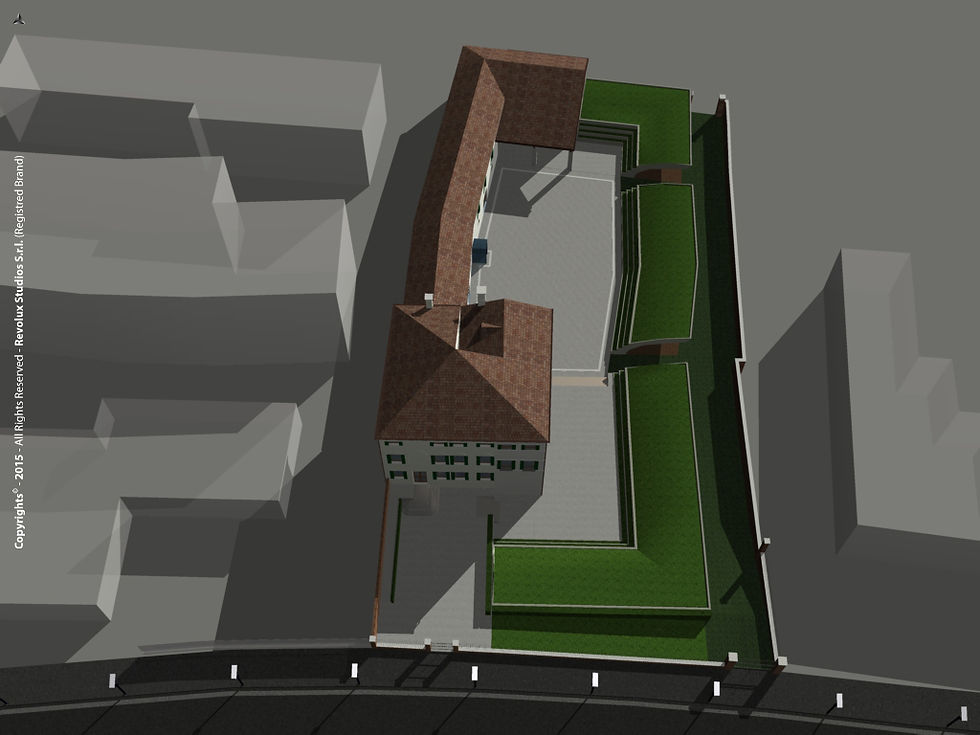

Author: 16th-century Venetian craftsmen Period: 16th century Building Size: 1,200 sqm Protected Outdoor
Area: 2,800 sqm
Conservation Status: In need of restoration Status: Already awarded State grants for restoration
Description: 16th-century Venetian villa, barchessa (annex barn) and outdoor lawn area
Location: San Pietro di Strà - (Venice) - ITALY
Info & Price: Contact us at: revoluxstudios@gmail.com
Villa Contarini Arlesega


Author: Vincenzo Scamozzi
Period: 17th century
Building Size: approx. 4,500 sqm
Protected Outdoor Area: 93,000 sqm Conservation Status: Villa, oratory and dovecote tower in fair condition; barchessa (annex barn) restored
Status: Already awarded State grants for restoration
Description: Villa, barchessa, oratory, dovecote tower and agricultural land
Location: Arlesega di Mestrino - (Padua) - ITALY
Info & Price: Contact us at: revoluxstudios@gmail.com
Villa Le Fonti


Author: Local craftsmen
Period: 15th–19th century
Building Size: 4,400 sqm
Protected Outdoor Area: Approx. 80,000 sqm Conservation Status: Adjacent structures well preserved; palazzo and farmhouse in need of restoration
Status: Eligible for State restoration grants Description: Palazzo, farmhouse, adjacent structures and wooded outdoor area
Location: Monteloro di Pontassieve - (Florence) - ITALY
Info & Price: Contact us at: revoluxstudios@gmail.com
Villa Pietramellara


Author: Angelo Venturoli
Period: 17th–19th century
Building Size: 4,800 sqm
Protected Outdoor Area: 92,500 sqm Conservation Status: In need of restoration
Status: Eligible for State restoration grants Description: 18th-century property complex comprising a villa, farmhouse, mill, dovecote tower, farm manager's house and other minor buildings. Planning permission is also authorized for the potential development of a care home (R.S.A.) facility with 120 beds
Location: Castelfranco Emilia - (Modena) - ITALY
Info & Price: Contact us at: revoluxstudios@gmail.com
Palazzo Savonarola


Author: Enrico Guidotti
Period: 1871–1875
Building Size: 2,500 sqm
Protected Outdoor Area: 700 sqm
Conservation Status: Very good
Status: Already awarded State grants for restoration
Description: 19th-century palazzo built during the "Florence as Capital" period
Location: Piazza Savonarola 1- (Florence) - ITALY
Info & Price: Contact us at: revoluxstudios@gmail.com
Villa Da Ponte


Author: Local craftsmen, with frescoes from the school of G.B. Crosato
Period: 17th–18th century
Building Size: 3,500 sqm
Protected Outdoor Area: 10,500 sqm
Conservation Status: Very good
Status: Already awarded State grants for restoration
Description: Villa, barchessa (annex barn), oratory and walled garden ("brolo") surrounding the villa
Location: Cadoneghe - (Padova) - ITALY
Info & Price: Contact us at: revoluxstudios@gmail.com
Complesso San Francesco a Ripa


Author: Local craftsmen
Period: 13th–18th century
Building Size: 12,500 sqm
Protected Outdoor Area: 20,000 sqm Conservation Status: In need of restoration
Status: Eligible for State restoration grants Description: Disused Franciscan Friars Minor convent
Location: Piazza San Francesco d'Assisi - (Rome) - ITALY
Info & Price: Contact us at: revoluxstudios@gmail.com
Il Colombaio


Author: Tuscan craftsmen of the 17th and 19th centuries
Period: Original structure from the early 1600s built over medieval remains, with 19th-century expansion works and chinoiserie frescoes by Gaetano Brunacci
Building Size: approx. 1,500 sqm
Protected Outdoor Area: Approx. 2,500 sqm
Conservation Status: Fairly good in some areas, in need of restoration in others
Status: Eligible for State restoration grants
Description: Villa and barchessa (annex barn) with an appurtenant walled garden ("brolo"), already divided into fifteen authorized residential units
Location: Castelnuovo Berardenga - (Siena) - ITALY
Info & Price: Contact us at: revoluxstudios@gmail.com
Rotonda del Brunelleschi


Author: Filippo Brunelleschi and Tuscan craftsmen of the 16th century; further works also carried out in the 1920s–1930s
Period: Original structure from the early 14th century built over Roman remains, with works by Filippo Brunelleschi for the construction of the model of the dome of Santa Maria del Fiore, located a short distance from the historic complex, and the Dominican Convent of Santa Maria degli Angeli
Building Size: Approx. 5,500 sqm, net of frescoed internal cloistered courtyards
Protected Outdoor Area: Adjacent to Piazza Brunelleschi, a short distance from Santa Maria del Fiore in Florence
Conservation Status: Fairly good in some areas, in need of restoration in others
Status: Eligible for State restoration grants
Description: The octagonal Brunelleschian building is used for exhibitions and events; the convent is used for residences and services
Location: Piazza Brunelleschi - (Florence) - ITALY
Info & Price: Contact us at: revoluxstudios@gmail.com
Castello di Sapia


Author: Tuscan craftsmen of the 13th century
Period: Late Roman structure with subsequent medieval remains; the noblewoman Sapia Salvani, owner of the Castle, is mentioned by Dante in Canto XIII of Purgatorio in the Divine Comedy. Further significant renovation works were later carried out by the Piccolomini family (Pope Pius II – Pienza) in the 15th century
Building Size: Approx. 1,500 sqm
Protected Outdoor Area: Approx. 2,500 sqm
Conservation Status: Fairly good in some areas, in need of restoration in others
Status: Eligible for State restoration grants
Description: The castle is already divided into nine authorized residential units
Location: Monteriggioni - (Siena) - ITALY
Info & Price: Contact us at: revoluxstudios@gmail.com