

Restoration Criteria for Venetian Villas: Preserving the Art and History of Palladian Heritage
- Revolux Studios
- Jul 9
- 4 min read


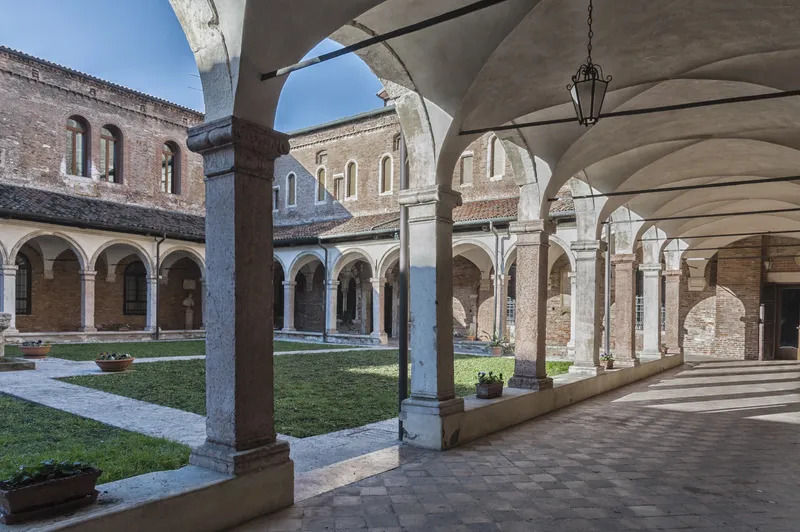

Venetian villas, architectural masterpieces by Andrea Palladio and his successors, represent an invaluable historical and cultural heritage.
Preserving these works requires a rigorous and meticulous approach, respectful of the conservative restoration criteria established to ensure that their authenticity, beauty and historical value are maintained over time.
In this article, we explore the fundamental criteria followed in the restoration of Venetian villas, with the aim of preserving architectural heritage in line with the standards established for Italian and international Cultural Heritage Properties.
Preservation of Historical Authenticity The first fundamental criterion in the restoration of Venetian villas is the preservation of historical authenticity. This principle requires that every intervention respect the original materials and construction techniques used.
In the case of Palladian villas, for example, materials such as Vicenza stone and oak wood are preserved or restored using methods compatible with 16th-century techniques.
Significant alterations to the structure are avoided, keeping proportions, decorations and the architectural layout unchanged. The goal is to ensure that every element respects the original era, avoiding the use of modern materials or technologies that could alter the villa's authentic appearance.
Reversibility of Interventions
An essential principle in conservative restoration is the reversibility of interventions. This criterion requires that any changes made can be removed or undone without damaging the original structure. This approach is essential to ensure that future generations of restorers can carry out further work using even more advanced techniques, should new needs or more precise methodologies emerge.
For example, in masonry consolidation or surface cleaning work, materials and products compatible with the original ones are used, but ones that can be removed without compromising the villa's integrity.
Enhancement of Painted and Sculptural Decorations
Painted and sculptural decorations are a fundamental part of Venetian villas, many of which feature frescoes by great masters such as Paolo Veronese and Giambattista Tiepolo. In restoration, these artistic elements are treated with extreme care and attention, using non-invasive techniques and specific conservation materials.
Damaged frescoes and sculptures are restored using cleaning and consolidation techniques and, in exceptional cases, pictorial reintegration, where necessary for the work's legibility. The "sottotono" (tonal retouching) method is one of the most widely used approaches, as it allows missing parts to be highlighted without falsifying the original image. Every intervention is meticulously documented to ensure transparency and traceability.
In-Depth Historical Study and Documentation
Before undertaking any restoration, an in-depth historical and documentary study of the villa is carried out. This study makes it possible to understand the building's evolution, its transformations over time, and any additions or modifications made by previous owners. Archives, historical records, old drawings and documents that may provide information on original materials and construction techniques are consulted.
This criterion is essential because it ensures that the restoration is based on an in-depth understanding of the building's historical context and original features, allowing experts to faithfully respect the original architectural vision.
Maintaining the Building's Function Venetian villas were conceived not only as luxury residences, but also as centers for agricultural management, representative venues and leisure spaces.
Good restoration must therefore respect the villa's original functions or, in the case of different intended uses, adapt without compromising structural or aesthetic integrity.
Today, many Venetian villas are used as museums, event venues, hospitality facilities or private residences. Restoration must therefore reconcile modern functional needs with respect for historical features, making the building usable without compromising its authenticity.
Respect for the Environment and Landscape
Venetian villas are not simple, isolated buildings: they are conceived as an integral part of the landscape. The interaction between the structure and its surrounding environment is one of the most valuable aspects of the original design, which aimed to create a harmonious dialogue between man and nature. For this reason, restoration must also respect the landscape context, preserving gardens, agricultural appurtenances and original views.
Work on historic gardens or courtyards, for example, involves the use of historically compatible tree and flower species, and every landscape modification is carefully designed so as not to alter the original natural context.
Involvement of Experts and Innovative Technologies
The involvement of qualified experts is essential in the restoration of Venetian villas. The work is often entrusted to teams of architects, restorers, art historians and engineers specializing in conservative restoration.
In recent years, restoration has also made use of advanced technologies such as photogrammetry, laser scanning and spectroscopic analysis, which provide detailed data without direct intervention on the structures.
These technologies are used, for example, to map the state of surface deterioration, monitor structural stability, and precisely document every phase of restoration. Thanks to these tools, it is possible to more precisely respect conservation criteria and ensure optimal results.
Compliance with Cultural Heritage Regulations
The restoration of Venetian villas is governed by a series of national and international regulations aimed at protecting cultural heritage. In Italy, the Code of Cultural Heritage and Landscape sets out the guidelines for interventions on historic buildings, while the Venice Charter and other UNESCO conventions provide an international framework of reference for conservation principles.
These regulations ensure that every restoration complies with the highest standards of protection and that every modification respects the historical, artistic and cultural values of Venetian villas, considered a World Heritage site.

Comments